
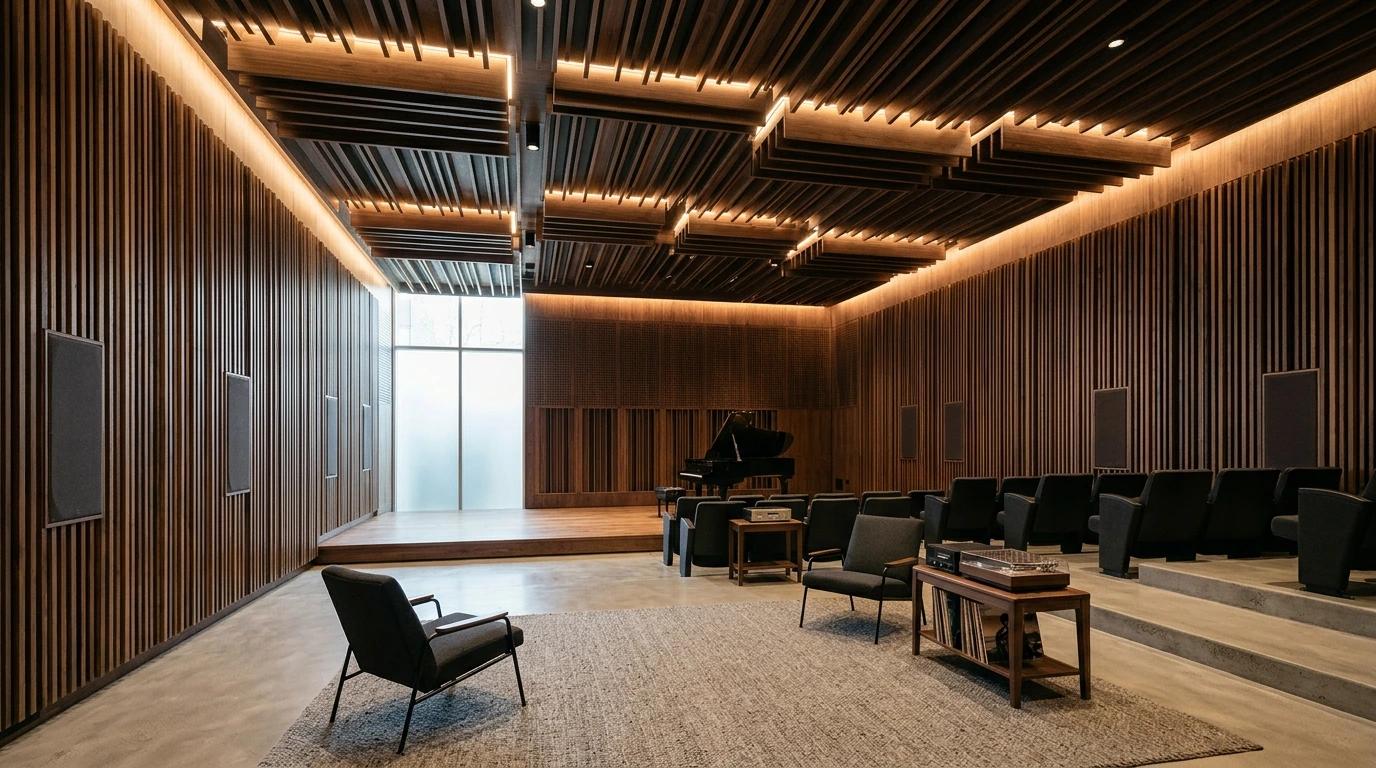
Define who needs to hear what
Start with the programme: spoken presentations, background music, live music, video playback, announcements or a combination. Map the audience areas, the likely presenters or performers, and whether different zones need independent volume or content.
A system for clear speech in a meeting room has different priorities from a restaurant, classroom, worship space or event venue. State the operational need before comparing speaker quantities or amplifier ratings.
Assess the room and sources of noise
Visit the room while it is in use where possible. Note hard surfaces, air-conditioning noise, adjacent activity, ceiling height and places where people speak or listen. These conditions can affect speech clarity and perceived coverage.
If the project involves acoustic treatment or sound isolation, describe the problem precisely. Treatment for reflections inside a room is not automatically a solution for sound transfer to another space.
Plan the system path and control
Identify every source, microphone, playback device, display connection and control point. Decide who needs simple day-to-day control and who is responsible for advanced settings, so the interface matches the people operating it.
Professional audio and acoustic solutions can be scoped around the room and use case rather than around a product list alone.
Coordinate installation requirements
Agree cable routes, power, equipment ventilation, rigging or mounting needs and service access with the appropriate project professionals. Electrical, structural and building work should be carried out by qualified parties within their agreed scope.
Use the actual selected equipment to confirm compatibility, loading, coverage and connection details. Do not rely on generic diagrams as proof that a system will suit a particular room.
Commission with real-world checks
Test the final system with representative speech, music and source material at normal operating levels. Check the audience areas, control workflow and the response of any microphones or conferencing equipment before handover.
Record the final equipment list, basic operating procedure and support contacts. A practical staff handover helps protect the value of the installation long after the commissioning day.
Take the next step
Explore Nissi's professional audio and acoustic solutions or share your room requirements through the project enquiry form to discuss a practical next step.