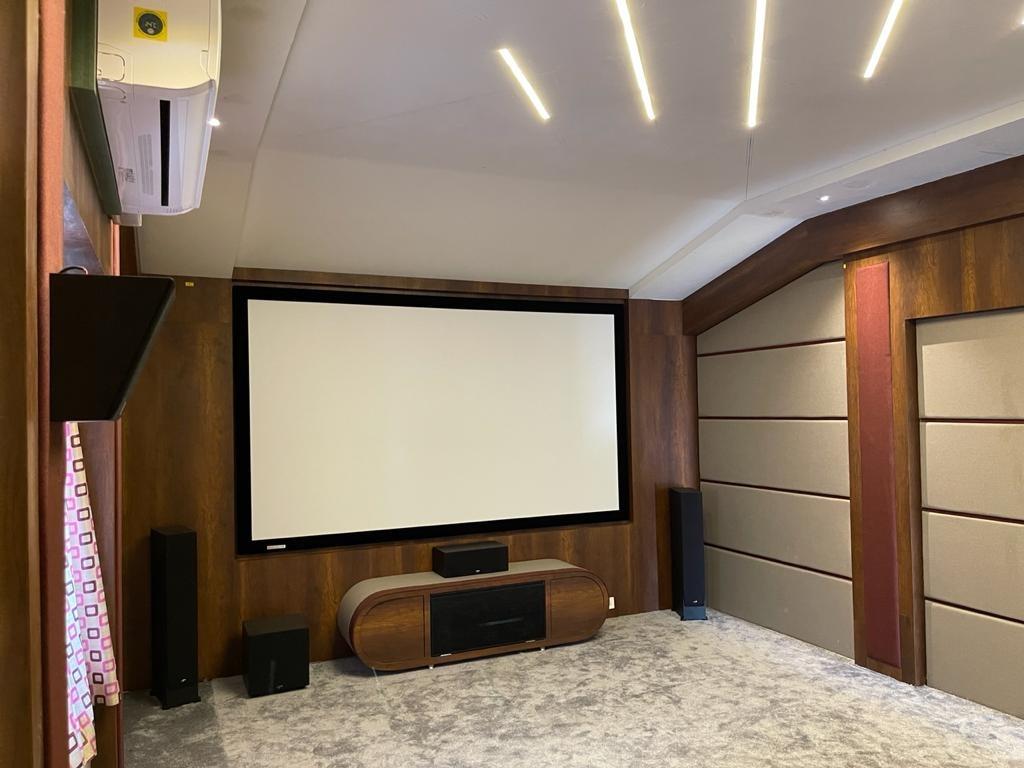
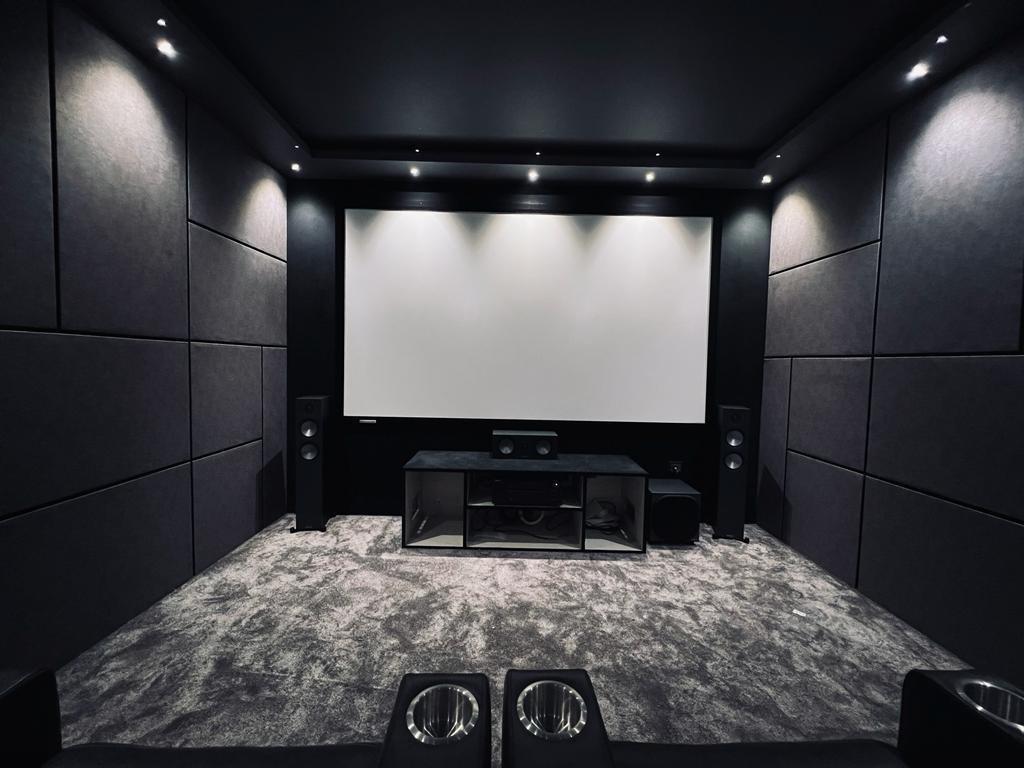
Key ideas at a glance
- Lock in your screen wall, seating rows and AV rack location before concealed wiring begins.
- Pre-wire Dolby Atmos height channels, subwoofer points and projector power alongside HDMI conduits.
- Test every signal path and label both ends of every cable before false ceilings or wall panelling close.
Start with a room plan
Mark the screen wall, main seats, possible speaker positions and the rack where the AV receiver and source devices will live. Include doors, windows, ceiling beams and cabinetry so your home theatre cabling plan aligns with full home theatre installation planning.
Agree early on scope between the AV integrator and interior team: Nissi's focus is AV integration and acoustics, while civil and interior carpentry are coordinated separately.
List the connections you expect to need
Every projector cable route, AV receiver feed, surround speaker and subwoofer needs a clear pathway before plastering or panelling starts.
- Video run: Dedicated HDMI conduit (plus spare pull-wire) from the AV rack to the ceiling projector mount, verified against projector throw distance and room planning.
- Ear-level & Atmos speaker wiring: Front left/centre/right, side surrounds, rear surrounds and ceiling Dolby Atmos height channels terminated cleanly at speaker back-boxes.
- Subwoofer & network: Shielded subwoofer coax/balanced runs to candidate bass corners, plus wired Ethernet to the AVR, media player and projector.
Leave a practical route for changes
Discuss accessible AV conduits, inspection hatches and rack ventilation with the installer and electrician. Future HDMI standards evolve faster than walls do, so an oversized conduit with a draw wire protects your investment.
Power and low-voltage AV lines should stay separated to reduce interference, following local electrical codes and labelled clearly at both ends before finishes conceal them.
Keep high-voltage lighting circuits physically separated from speaker and HDMI conduits to prevent hum and signal drop.
Test the system before the room is closed
Where possible, test signal paths, cable continuity and projector throw alignment before final wall finishes or acoustic room treatment panels are mounted.
If final speaker or projector models are still open—for instance while reviewing your home theatre budget in India—confirm the conduit sizes and back-box locations first so finishes aren't delayed.
Questions to bring to your installer
Bring room dimensions and site photos so your integrator can confirm rack ventilation, projector lens offset, speaker termination height and future conduit access before false-ceiling framing starts.
Take the next step
Explore Nissi's home theatre solutions or share your room dimensions and goals through the project enquiry form to plan a practical next step with Nissi Office Systems.
Frequently asked questions
01When should home theatre wiring be done during renovation?
Conduits and speaker wiring should be laid during the first electrical fix—before false ceilings, wall panelling and final paint—so cables remain hidden and serviceable.
02Should I run cables for Dolby Atmos even if starting with 5.1?
Yes. Pre-wiring two or four overhead speaker points during construction costs very little compared to opening a finished ceiling later.
Plan your next step
Read the complete guide: Home Theatre Installation in Hyderabad: Planning Guide