Key ideas at a glance
- Absorption inside a room differs from blocking sound between rooms.
- Compare the tested panel assembly, not just its decorative face.
- Coverage and placement depend on the room and listening requirement.
What are acoustic panels and how do they work?
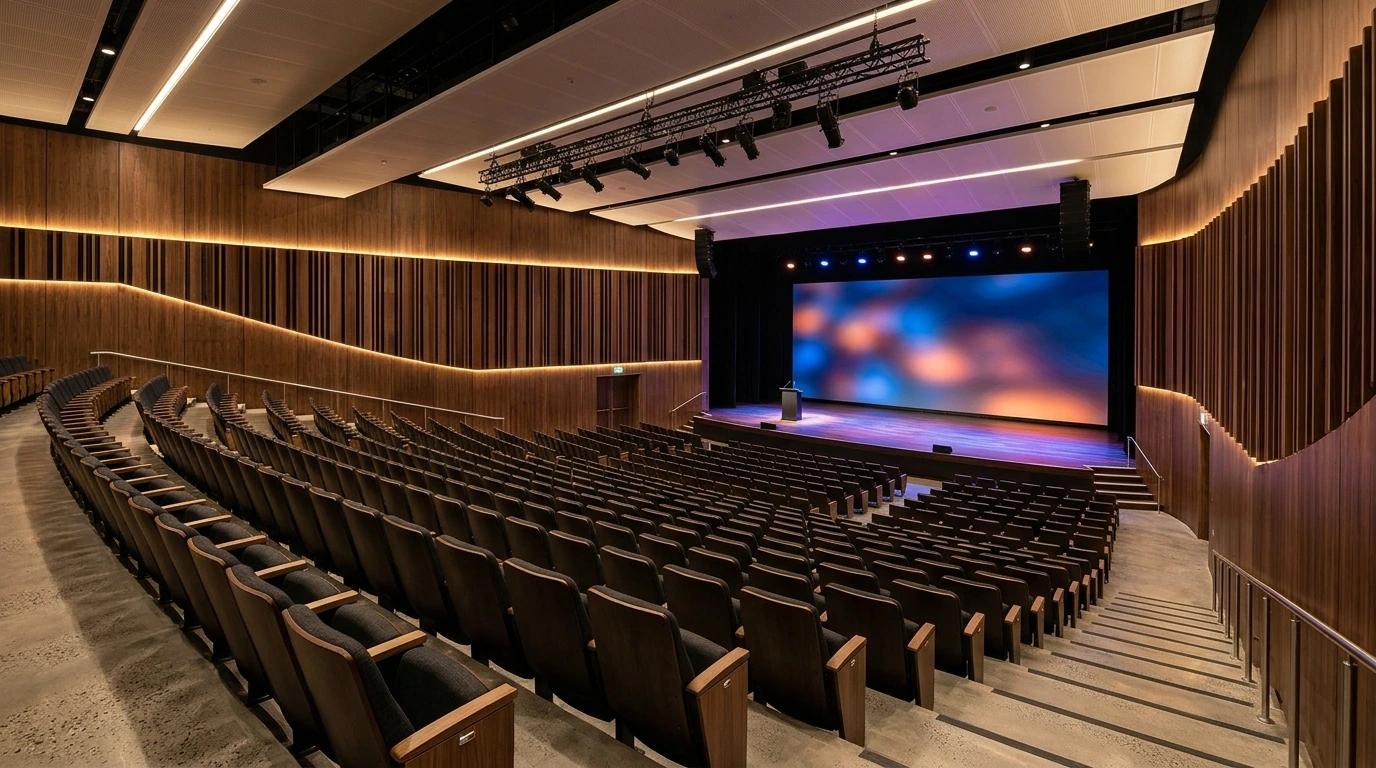
Acoustic panels are room-treatment elements designed to absorb sound. By reducing selected reflections, they can help manage reverberation and support clearer speech or listening. Their performance depends on the construction and installation, including the frequencies of interest.
They do not automatically prevent outside noise or sound transfer through a partition. Read acoustic treatment versus sound isolation when the problem is disturbance in another room rather than echo within the treated room.
Compare fabric, wood, polyester and foam systems
A material name is not a complete performance specification. Ask for absorption data, dimensions, thickness, mounting details and the tested assembly. Where a decorative face is used, confirm what sits behind it and how the final construction relates to the test report.
Treat these as procurement checks rather than assuming one material family is best in every room.
- Acoustic fabric panels: identify the absorbing core, fabric and mounting assembly.
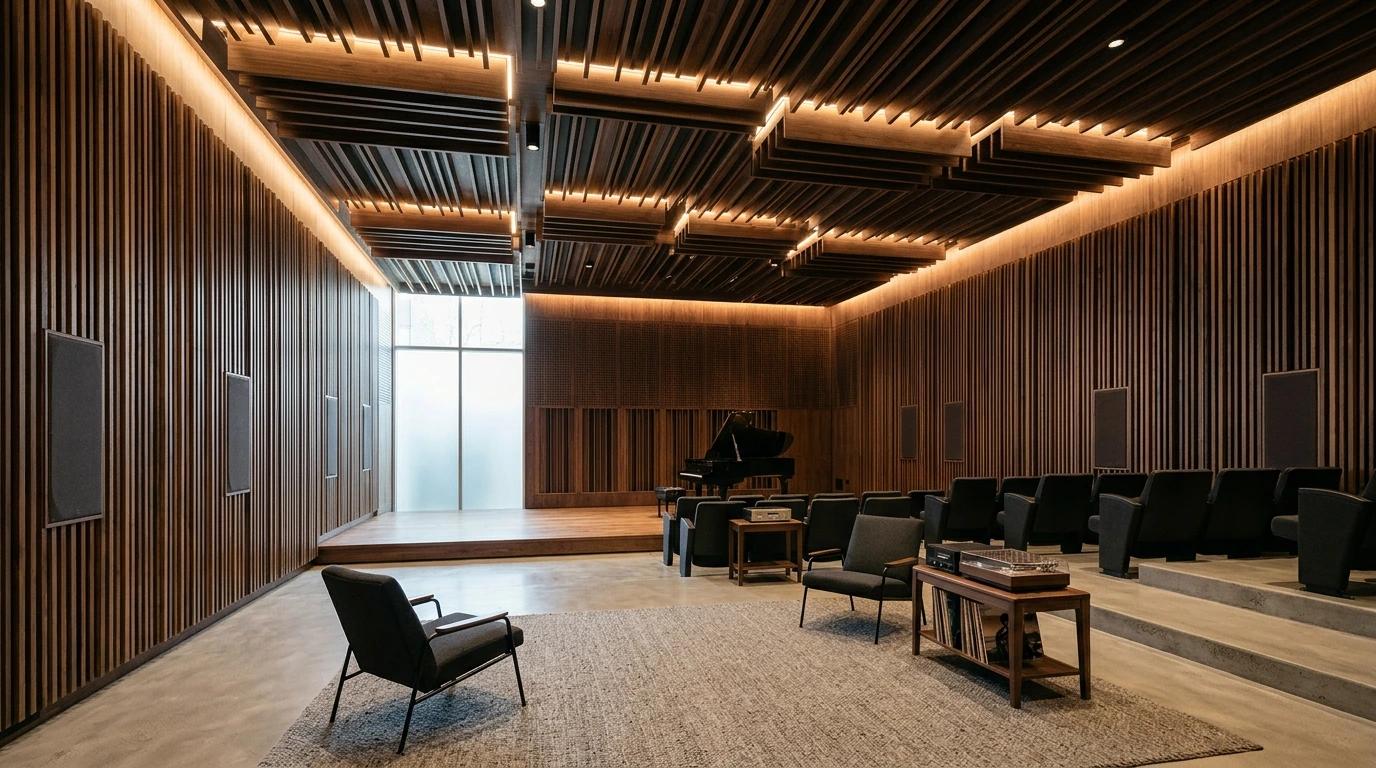
- Acoustic wood panels: ask whether the product is slatted, perforated or another system, and request the complete build-up.
- Polyester acoustic panels: confirm the supplied thickness, finish and mounting method against documented performance.
- Foam panels: check frequency performance, durability and documented suitability for the intended space.
How many acoustic panels do I need?
There is no reliable universal panel count based only on floor area. Room volume, hard surfaces, existing finishes, occupancy and the intended activity all affect the treatment brief. Ask for the proposed coverage and the reason for each treated surface.
Include both occupied and unoccupied use in the discussion. A room that hosts a small online meeting and a full training class may need a balanced treatment plan rather than a single demonstration with an empty room.
Where should acoustic panels be placed?
Ask the designer to assess reflection paths, listening positions and available wall or ceiling space. Keep openings, access panels and equipment clear. A visual arrangement should support the acoustic plan rather than determine it alone.
In a home studio, bring the monitor and desk positions to the assessment. In a conference room, include speaker and microphone locations. In a home theatre, discuss the complete listening area, not only the wall behind the screen.
Specify installation and handover
Request the proposed fixing system, substrate requirements, fire documentation applicable to the project and cleaning guidance. Use qualified installers for overhead or heavy assemblies and coordinate with building requirements.
Agree how the result will be assessed using the intended activity. Include a before-and-after listening record or measurements appropriate to the brief, and keep product documentation with the professional audio system plan.
Discuss your project brief
Review the related solution or share your project requirements to discuss a room-specific scope.
Frequently asked questions
01Do acoustic panels soundproof a room?
Ordinary absorptive panels mainly manage reflections inside a room. Sound isolation requires assessment of partitions, openings and other transmission paths.
02How do I install acoustic panels?
Use the fixing and mounting method specified for the exact product and substrate. Confirm access, building requirements and overhead installation with the project team.
03Can I choose acoustic panels by appearance alone?
No. Compare documented performance and the complete installed assembly alongside appearance, cleaning and service requirements.
Plan your next step
Read the complete guide: Pro Audio Setup: A Room-First Planning Guide