Key ideas at a glance
- Specify usable coverage across the seating area, not only front-row loudness.
- Plan microphone and loudspeaker positions together.
- Separate speech reinforcement, performance and emergency-system requirements.
Define the auditorium programme
List lectures, presentations, music, theatre and hybrid events separately. Identify standing and seated presenters, visiting performers, playback sources and recording needs. Ask who will operate each type of event and how much setup time they have.
A public address system for announcements is not automatically the right performance system. Emergency voice functions need a separately verified specification under the requirements that apply to the building; do not assume a general AV installation fulfils that role.
Map the audience before choosing speakers
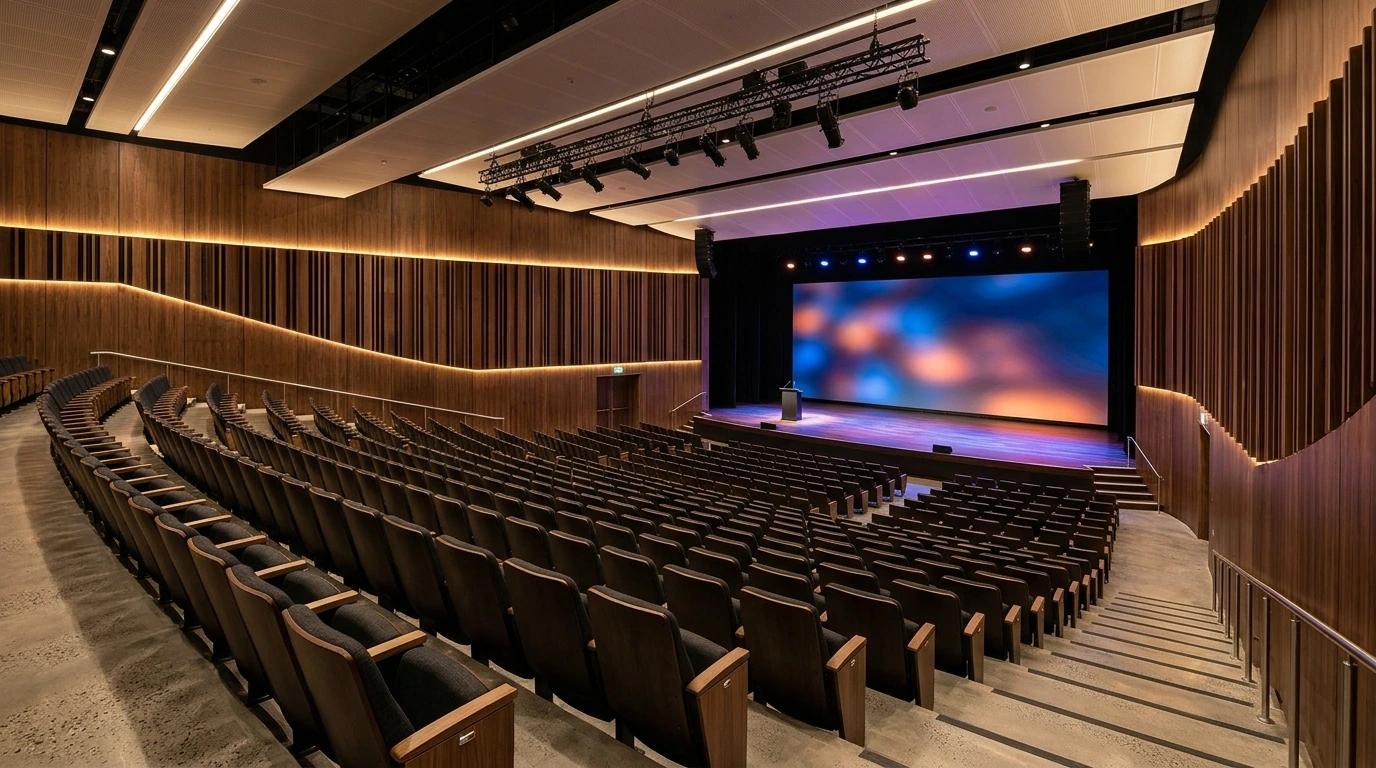
Provide a scaled seating plan showing the stage, side areas, rear rows, balconies and obstructions. Ask the designer to explain how listeners across those areas receive clear, balanced sound.
Compare point-source, column or line-array proposals through their coverage design and intended operating conditions. Do not select a type solely because it appears in another venue. Review mounting access and the visual impact on stage, screen and lighting sightlines.
Plan microphone use and feedback control
List podium, handheld, lapel, panel-discussion and audience-question microphones. Position microphones and loudspeakers as a coordinated system; sound returning from a loudspeaker into an open microphone can create feedback.
Include practical rehearsal scenarios. Test a presenter moving away from a lectern, a quiet speaker and audience questions. Train operators in microphone handling and mute discipline rather than relying on processing to correct every problem.
Assess auditorium acoustics alongside reinforcement
Document hard walls, large glazing, stage finishes and existing treatment. Room reflections can make amplified speech difficult to follow even when the equipment works. Ask which surfaces need assessment and how the proposed treatment relates to speech or performance use.
Keep the acoustic scope and its finish drawings aligned with lighting, air-conditioning and fire-service layouts. The professional audio setup guide explains how sources, room and signal path fit together.
Make the handover usable for the operator
Agree test positions across the auditorium and the content used for acceptance. Check speech and music at normal operating levels, record the final settings and label the signal paths. Include stage inputs and any conferencing or recording feeds.
Provide an everyday startup sequence, an event checklist and a recovery procedure. Identify who can change system settings, where backups are kept and how faults are escalated. A well-documented system is easier for an institution to operate after the installer leaves.
Discuss your project brief
Review the related solution or share your project requirements to discuss a room-specific scope.
Frequently asked questions
01Is a larger amplifier enough to improve auditorium speech?
Not by itself. Review coverage, microphone use, room reflections and system setup together.
02Should auditorium acoustic panels be chosen before the sound system?
Plan them together so treatment, loudspeakers, stage requirements and sightlines support the same programme.
Plan your next step
Read the complete guide: Pro Audio Setup: A Room-First Planning Guide